
Nobody wants to hear they have a cavity. That news usually comes with a sigh, a little embarrassment, and maybe a mental promise to floss more often. But cavities are incredibly common, and catching them early means you have more options than you might think.
At East Hills Dental Associates in Roslyn Heights, we don’t just fill cavities and send you on your way. We take the time to explain what’s happening, what your options are, and what we recommend based on your specific situation.
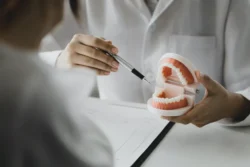
Option One: Fluoride Treatment (For Very Early Cavities)
Not every cavity needs a filling right away. If we catch decay early enough, before it has broken through the enamel, we can sometimes stop it in its tracks.
Fluoride treatments help remineralize weakened enamel. We apply a concentrated fluoride varnish right in the office. It’s quick, painless, and takes just a few minutes. Combined with improved home care and prescription-strength fluoride toothpaste, this approach could reverse very early decay.
But this only works for the smallest cavities. Once the decay has formed a hole in the enamel, fluoride won’t be enough. At that point, you’re looking at one of the restorative options below.
Option Two: Composite Fillings (The Most Common Choice)
Composite fillings are what most people think of when they hear “getting a cavity filled.” These are tooth-colored resins that blend in with your natural teeth. We apply the material in layers, shape it to match your tooth, and harden it with a special light.
The big advantage here is aesthetics. Composite fillings look natural. You can’t tell they’re there. They also bond directly to the tooth structure, which means we don’t have to remove as much healthy enamel compared to older filling materials.
Composite fillings work well for small to medium-sized cavities in visible areas. They’re durable, though not quite as strong as some other options. With good care, they typically last five to ten years.
Option Three: Inlays and Onlays (The Middle Ground)
When a cavity is too large for a standard filling but not large enough to need a full crown, we often recommend an inlay or onlay. An inlay fits inside the grooves of your tooth. An onlay covers one or more of the tooth’s cusps. Both are custom-made in our on-site lab and bonded into place. They’re stronger than composite fillings and more resistant to wear, making them a great choice for back teeth that take a lot of chewing force.
The process takes two visits. We prepare the tooth, take an impression, place a temporary restoration, and then bond the permanent inlay or onlay at your second visit. It’s more involved than a filling, but the result is more durable and longer-lasting.
Option Four: Dental Crowns (For Extensive Decay)
Sometimes a cavity is just too big for a filling or even an inlay. Maybe the decay is extensive. Maybe the tooth has already had multiple fillings and the remaining structure is weakened. In those cases, a crown is often the best answer.
A crown covers the entire visible part of the tooth above the gum line. It restores both the shape and strength of the tooth. With Dr. Sousa’s background as a Master Ceramist, we craft crowns that look completely natural.
Like inlays and onlays, crowns require two visits. The tooth is shaped, impressions are taken, and the permanent crown is fabricated in our lab. The result is a restoration that can last fifteen years or more with proper care.
What About Amalgam Fillings?
You might be wondering about silver fillings, also known as amalgam. We don’t use them in our office. While they’re durable and cost-effective, they require removing more healthy tooth structure, they don’t bond to the tooth the way composites do, and many patients prefer a metal-free option.
Don’t Wait Until It Hurts
Cavities don’t heal on their own. They only get bigger. The longer you wait, the more extensive the treatment becomes. What starts as a tiny spot that could have been reversed with fluoride might become a cavity that needs a filling. What starts as a filling might become a crown. And what starts as a crown might become a root canal.
If you suspect you have a cavity, or if it’s just been a while since your last check-up, come see us in Roslyn Heights. We’ll take a look, give you the straight answer, and help you choose the best path forward for your smile.