
Dr. Richard Sousa and Dr. Melody Ahdoot provide periodontal therapy to treat all stages of gum disease and help you restore a healthy and stable smile. Periodontal therapy is a restorative dentistry treatment that East Hills Dental Associates offers to new and existing patients.
A leading cause of tooth loss in adults, gum disease can lead to a wide range of problems and impact both dental and overall health and well-being. Maintaining gum health is an important part of your preventive dental care at East Hills Dental Associates and the key to enjoying a healthy smile. If you need treatment for gum disease in Roslyn Heights, NY, you can trust us to help you get back on the path to optimal oral health.
What is Periodontal Disease?
Periodontal diseases are infections of the gums that gradually destroy the support of your natural teeth, leading to changes in the bite, bone loss, and even tooth loss if left untreated.
Periodontal disease and decay are both caused by bacterial plaque, a colorless film that sticks to your teeth at the gum line. Plaque constantly forms on your teeth. By thoroughly brushing and flossing daily, you can remove harmful bacteria and help prevent periodontal disease. If not carefully removed by twice-daily brushing and flossing, plaque hardens into a rough, porous substance known as calculus (or tartar).
Prolonged irritation of the gums from developing gum disease starts to separate the gums from the teeth, creating pockets and allowing bacteria to harm bone and tooth structure.
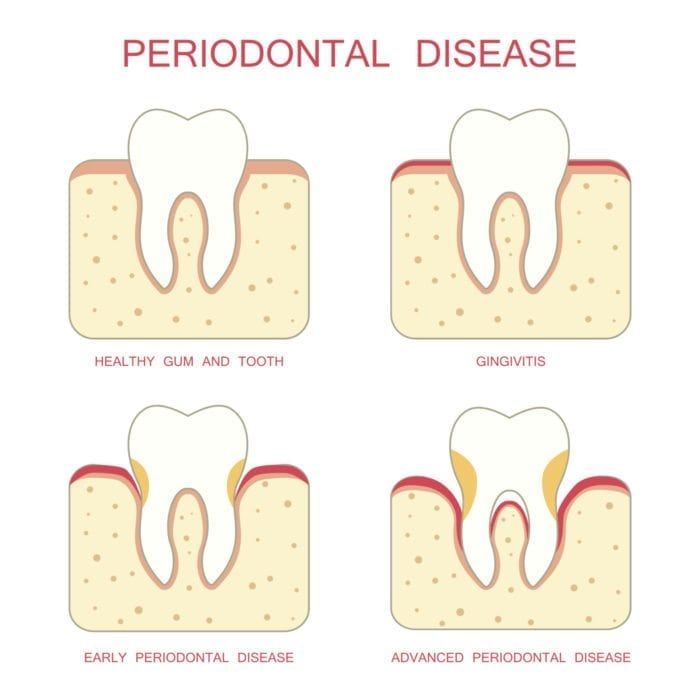
The Stages of Periodontal Disease
Periodontal disease occurs in stages. Without attention, the disease will get worse over time. Catching gum disease in the early stages makes treatment more effective and preserves your long-term dental health.
The first stage is gingivitis. Your gums will look red and swollen, and they will bleed easily when brushing or flossing. Gingivitis is caused by bacteria in plaque, a sticky film on your teeth. The good news is that your dentist can reverse gingivitis with treatment and dental hygiene education.
Without proper treatment for gingivitis, it can turn into early periodontitis. At this point, the infection starts to spread below your gum line. Your gums begin to pull away from your teeth, forming small pockets. These pockets can trap more bacteria, worsening the problem.
The next stage is moderate periodontitis. The infection continues to worsen, and the pockets between your gums and teeth get larger. Your gums might start to shrink, making your teeth look longer. You might notice your teeth feeling a bit loose, and you could have bad breath that won’t go away.
The last and most serious stage is advanced periodontitis. By now, the infection has caused significant damage. Your gums pull back even more, and the bones holding your teeth in place are weak and deteriorating. Your teeth might become very loose or even fall out. This stage can cause lasting damage to your mouth.
Gum Disease Treatment Roslyn Heights, NY
The first step in treating gum disease is an exam with Dr. Sousa or Dr. Ahdoot to evaluate your oral health, the stage of disease, and any possible damage. From there, a personal treatment plan will be discussed to remove bacteria, repair any damage, and stabilize your gum health.
- Antibacterial rinses: Early-stage and chronic gum disease can often be managed with the use of an antibacterial rinse as part of your daily oral hygiene routine.
- Scaling and root planing: A more intensive cleaning along the gum line and tooth roots to remove built-up tartar and stimulate healing of infected gum tissues.
- Oral surgery: For advanced gum disease, surgical treatment may be necessary to address damaged tissue, restore the gums, and support long-term dental health.
How Can I Prevent Gum Disease?
The best way to prevent gum disease is to establish a healthy oral hygiene routine, which includes twice-daily brushing and flossing, and to visit us twice a year for preventive dental care. Other healthy habits that can reduce your risk of developing gum disease include:
- a healthy diet that is low in added sugars
- drinking water after meals and snacks to rinse the mouth
- maintaining good overall physical health
- discussing any medical conditions or medications that may have oral side effects with us during your visit
Frequently Asked Questions About Gum Disease
If you’re curious about gum disease, you’re not alone. Many have questions about what causes it, how to prevent it, and what treatments are available. Here, we’ve answered some of the most frequently asked questions about gum disease to help you better understand this common condition and how to keep your gums healthy.
Is gum disease painful?
Gum disease can be painful at times. This oral disease is caused by bacteria that accumulate in your mouth, leading to swollen, bleeding gums. If left untreated, it can cause significant pain and even lead to tooth loss. That’s why it’s important to brush and floss every day to keep your gums healthy.
How is gum disease diagnosed?
Your dentist will diagnose gum disease during a check-up. They check for signs like red or swollen gums, bleeding when brushing, or bad breath. Your dentist will take X-rays to check for damage to the bones supporting your teeth. Early diagnosis is important to treat gum disease before it gets worse.
Can gum disease return after treatment?
Yes, gum disease can come back even after treatment. Keeping up with good dental health habits like teeth brushing and flossing daily is vital to preventing its return. Twice-yearly visits to the dentist for teeth cleanings and check-ups can help prevent gum disease from returning. If you notice signs and symptoms of gum disease returning, be sure to contact your dentist right away for treatment.
What are the dangers of gum disease?
If you don’t treat periodontal disease effectively, it can lead to serious problems with your overall health. The infection has the potential to spread to other parts of the body, leading to heart disease, stroke, diabetes complications, and more. If left untreated, tooth and bone loss are likely.
Does scaling and root planing hurt?
The procedure itself does not hurt. However, if you have swollen, sensitive gums, you may experience some discomfort. We will administer a local anesthetic to the soft tissues around the treated area to limit discomfort during treatment.
Is gum disease permanent?
Dr. Sousa can typically spot the signs of gingivitis during your regular dental exams. If you treat it as soon as possible, it is fairly easy to cure, and treatment is usually successful. However, if you ignore gingivitis, it can develop into periodontitis. At this stage, the damage is typically permanent, and you can’t cure it.